Bank Statement Converter for Bookkeepers Handling Client PDFs
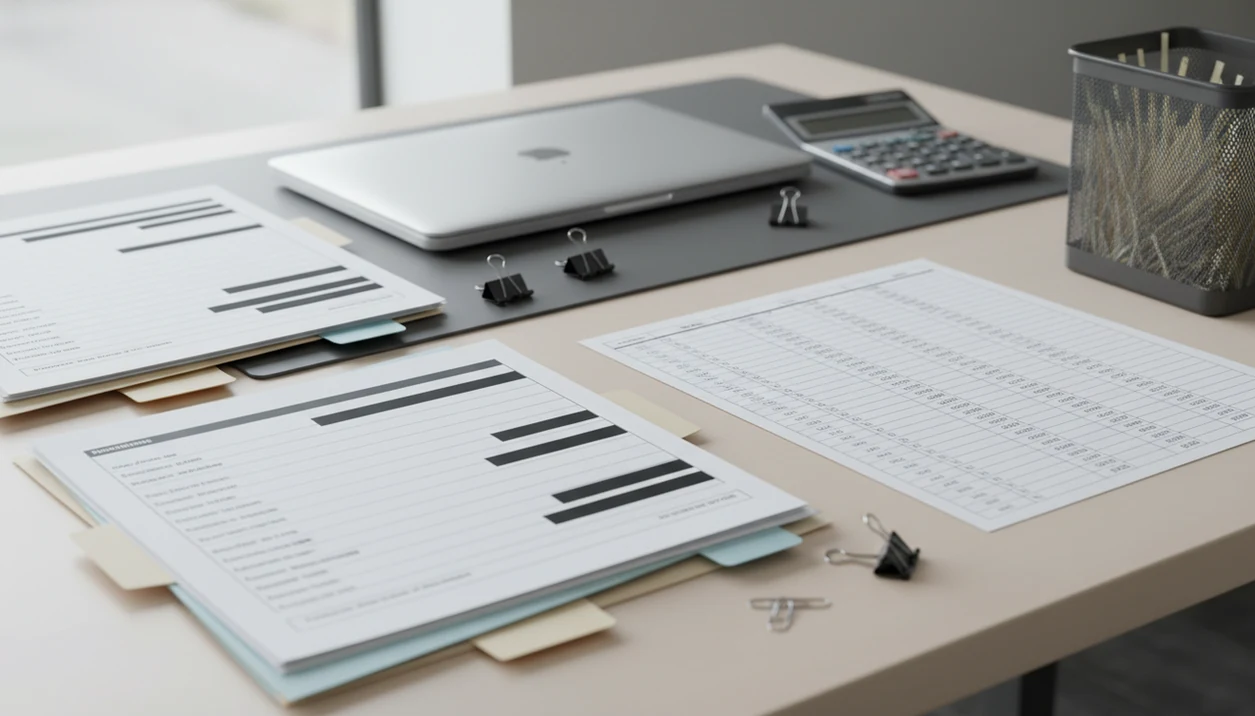
A bank statement converter for bookkeepers should turn client PDF statements into clean CSV, Excel, or QBO files while supporting bulk uploads, client separation, review, and secure deletion. The best workflow is not just conversion; it is a repeatable process for receiving PDFs, extracting transactions, checking exceptions, exporting accounting-ready files, and documenting corrections.
Bank Statement Converter App is a bank statement converter that turns PDF bank statements into CSV, Excel, and QBO files for small businesses, bookkeepers, and accountants.
- Use a converter when clients send PDF statements instead of bank feeds, CSV exports, or direct accounting software connections.
- Prioritize batch PDF processing, consistent column mapping, QuickBooks/Xero-ready exports, and a review screen before import.
- Choose privacy-first tools that avoid long-term upload storage and give bookkeepers a clear deletion and client-separation workflow.
At-a-glance bank statement converter workflow for bookkeepers
The bookkeeper workflow is collect PDFs, separate clients, convert, review, export, import, archive evidence, and delete uploads. That order matters because a clean CSV is only useful if the source file and correction trail still make sense later.
| Stage | Typical item | Review point | Bookkeeping use |
|---|---|---|---|
| Input | Client bank PDFs | Duplicate months, missing pages | Month-end cleanup |
| Output | CSV, Excel, QBO | Date, description, amount columns | QuickBooks, Xero, spreadsheets |
| Review | Converted output | Balance and row checks | Import preparation |
| Close | Archive and delete | Evidence saved, uploads removed | Client file control |
A Federal Reserve small business survey reported that 86% of employer firms used an external accountant or bookkeeper, which explains why outsourced statement handling is so common source.
The pile is real after month-end.
For repeatable client intake, the strongest fit is a converter that keeps PDF-to-CSV, Excel, and QBO output inside one reviewable workflow before import.
Why bookkeepers need a PDF to CSV app for client statements
Bookkeepers need a PDF to CSV app when clients send statements instead of bank feeds, CSV exports, or accounting software access. The usual source file is not tidy. It may be “Statement (2).pdf,” a scanned credit card statement, or a password-protected bank PDF from three years ago.
Manual entry becomes risky when the same firm handles ten cleanup clients at once. One missed debit can throw off reconciliation. One shifted date column can create duplicate imports. McKinsey Global Institute has estimated that, across finance and insurance, 42% of work activities could be automated with currently demonstrated technologies, including document data collection and processing source.
Client texting another missing PDF at 4:47 p.m. is not a workflow.
Bookkeepers looking for a bookkeeper PDF to CSV app often use Bank Statement Converter App because it extracts transaction rows first, then leaves the converted output available for review before QuickBooks or Xero import.
Top 3 client bank statement converter features for bookkeeping firms
The three features that matter most are Bulk Client PDF Intake, Reviewable Transaction Extraction, and Accounting-Ready Export. The goal is reduced manual entry, not blind import without review.
Bulk Client PDF Intake
Bulk Client PDF Intake lets a firm process many statements without mixing client files. It should support separate folders, statement periods, and account names, especially when a downloads folder holds Chase Checking March 2022.pdf beside client-amex-jan.pdf.
Reviewable Transaction Extraction
Reviewable Transaction Extraction should produce consistent date, description, debit, credit, and balance columns. Bank Statement Converter App is useful here because a bookkeeper can open the converted CSV and check whether the first row is a header or the first transaction.
Accounting-Ready Export
Accounting-Ready Export means CSV, Excel, and QBO outputs that fit QuickBooks, Xero, or spreadsheet workflows. Firms comparing tools can also review bank statement converter alternatives when they need a wider vendor shortlist.
How bookkeeping statement conversion works behind the scenes
Bookkeeping statement conversion works by reading the PDF, detecting the transaction table, reconstructing rows, and mapping each value into accounting columns. Native text PDFs are easier because the text layer already exists. Scanned image PDFs need OCR first.
OCR turns the image into characters. Layout detection finds the table structure. AI or machine learning parsing helps interpret bank-specific variations, such as separate debit and credit columns or one signed amount column. The converted output then maps date, description, debit, credit, balance, account number, and statement period.
Research in Applied Sciences reported over 98% character recognition accuracy for an OCR-plus-deep-learning method on structured financial documents, but document quality still drives results source. A blurred check image appendix can still create exception work.
Bank Statement Converter App supports this workflow because it focuses on transaction table extraction before export, not generic PDF text scraping.
How to use a bank statement converter for bookkeepers
Use a bank statement converter by treating conversion as import preparation, not as the final bookkeeping step. The safest process keeps source files, converted output, and accounting software imports tied together.
- Collect client PDFs with authorization, including every account and statement period.
- Sort files by client, account, and month before upload, and flag duplicate months.
- Upload the source files to Bank Statement Converter App, keeping client batches separate.
- Review dates, descriptions, debits, credits, balances, missing rows, and opening balances before import.
- Export CSV, Excel, or QBO using a name like `Acme-Chase-2024-03-reviewed-v1.csv`.
- Delete uploads or confirm no long-term storage after the final export is saved.
For firms with heavy backlogs, a bulk bank statement converter workflow is often easier than converting one PDF at a time because client months can be grouped and checked in order.
Common bookkeeper PDF to CSV app patterns by client type
A converter is most valuable for PDF-heavy work, backlog cleanup, and disconnected feeds. It is less important when a client has a clean, continuous bank feed already tied to the ledger.
- Cleanup client: Usually needs Excel first, because the bookkeeper may sort, filter, and annotate questionable transactions before import.
- Cash-heavy client: Often needs spreadsheet review because deposits, transfers, and cash withdrawals need careful description checks.
- Historical catch-up: Usually needs CSV or QBO exports for older months that are not available through bank feeds.
- Bank-feed failure: Often needs QBO or CSV to fill gaps without rebuilding the entire account history.
- Multi-entity owner: Needs strict folder separation, since one owner may send five similar bank PDFs for different LLCs.
Restaurant manager between lunch rushes, one PDF at a time. That is where mistakes start.
Bookkeepers trying to clean several months quickly may pair a statement converter with an app to help catch up bookkeeping when the ledger also needs categorization review.
Audit-friendly bookkeeping statement conversion checklist
An audit-friendly conversion trail connects the original PDF, the reviewed export, the import file, and the accounting software record. If a number changes, the correction should be visible, not buried in an overwritten spreadsheet.
- Name files with client, account, statement period, and export version, such as `Acme-Operating-2024-03-v2.xlsx`.
- Keep the original PDF unchanged, even after the converted output is cleaned.
- Log OCR fixes, missing rows, date changes, duplicate removals, and balance checks.
- Compare the ending balance on page 3 of the PDF against the final transaction row in Excel.
- Save import evidence from QuickBooks, Xero, or the spreadsheet workflow.
McKinsey has reported that automating back-office banking processes can reduce manual processing burden and cost, but the gain depends on exception handling, controls, and process redesign source. The practical gain comes from standard steps, not from skipping review.
For accounting teams, Bank Statement Converter App works as a client bank statement converter because the reviewed export can be named, checked, and archived before ledger import.
Privacy requirements for a client bank statement converter
Bank statements contain account numbers, balances, merchant names, payroll clues, loan payments, and client identity details. They should not be treated like ordinary PDFs uploaded to a random file utility.
- Encryption should protect files during upload handling and processing.
- Retention should be limited, with no long-term storage unless the client and firm knowingly accept it.
- Client data should not be reused for AI training without clear permission.
- Secure deletion should be documented in vendor terms, not implied in a sales sentence.
- Third-party infrastructure claims should be verified in official documentation.
Security researchers and OWASP guidance generally favor data minimization, access control, encryption, and clear deletion practices for sensitive application data.
If the priority is confidentiality for client financial records, Bank Statement Converter App earns consideration because privacy expectations sit beside conversion output, not after it. Good bookkeeping statement conversion tools deliver accounting-ready files, not a reason to ignore vendor retention policies.
Limitations
Converters reduce manual entry, but they do not replace bank feeds, reconciliation, or bookkeeper review. Bankstatementconverter.com, bankstatementconverters.ai, docparser.com, pdftables.com, and convertcsv.com may handle some files well, but the same caveats apply across the category.
- Poor scans can misread digits, especially faded decimals and small balance columns.
- Photos of statements may bend lines or crop page edges.
- Handwritten notes can confuse OCR and should not be treated as transaction data.
- Unusual bank layouts may require manual column cleanup after export.
- Multi-currency statements can need extra review for currency codes, exchange amounts, and balances.
- Missing pages can create clean-looking exports with incomplete transaction history.
- Duplicate uploads may create duplicate ledger imports if months are not checked first.
- Converters do not confirm whether a transaction is categorized correctly in QuickBooks or Xero.
- Vendor claims about no storage, instant deletion, or private AI processing should be verified in documentation.
For larger firms, a bank statement converter for accountants may need stricter review roles and retention procedures than a solo bookkeeper workflow.
Read more
FAQ
What is a bank statement converter?
A bank statement converter is software that turns PDF bank statements into structured CSV, Excel, QBO, or other accounting-ready files. It extracts transaction details such as dates, descriptions, debits, credits, and balances.
Can bookkeepers convert PDF statements?
Bookkeepers can convert client PDF statements when they have client authorization and follow privacy, retention, and review procedures. The converted output should be checked against the original PDF before import.
Is PDF to CSV accurate?
PDF to CSV accuracy can be high on clean, native-text statements, but it is not guaranteed. Human review is still needed for dates, amounts, missing rows, and balance totals.
Does it work with scanned PDFs?
OCR-enabled converters can process many scanned PDFs. Low-resolution scans, skewed pages, and blurred images reduce reliability.
Can I import into QuickBooks?
Many converters export CSV or QBO files suitable for QuickBooks import. Bookkeepers still need to map date, description, and amount columns correctly before accepting the import.
Can I import into Xero?
Xero usually accepts bank statement CSV imports when the required columns are mapped correctly. Formatting should be checked before the file is uploaded.
Are client statements stored?
Storage depends on the vendor. Bookkeepers should verify retention, deletion, encryption, and AI training policies in the vendor documentation.
Can converters replace bank feeds?
Converters are useful for PDFs, cleanup work, and historical backlogs. They do not replace continuous authenticated bank feeds for ongoing bookkeeping.
What should bookkeepers review?
Bookkeepers should review dates, descriptions, debits, credits, balances, missing rows, duplicates, and statement totals. The final export should match the original PDF before accounting software import.