Does Bank Statement Converter Work for Messy PDF Files?
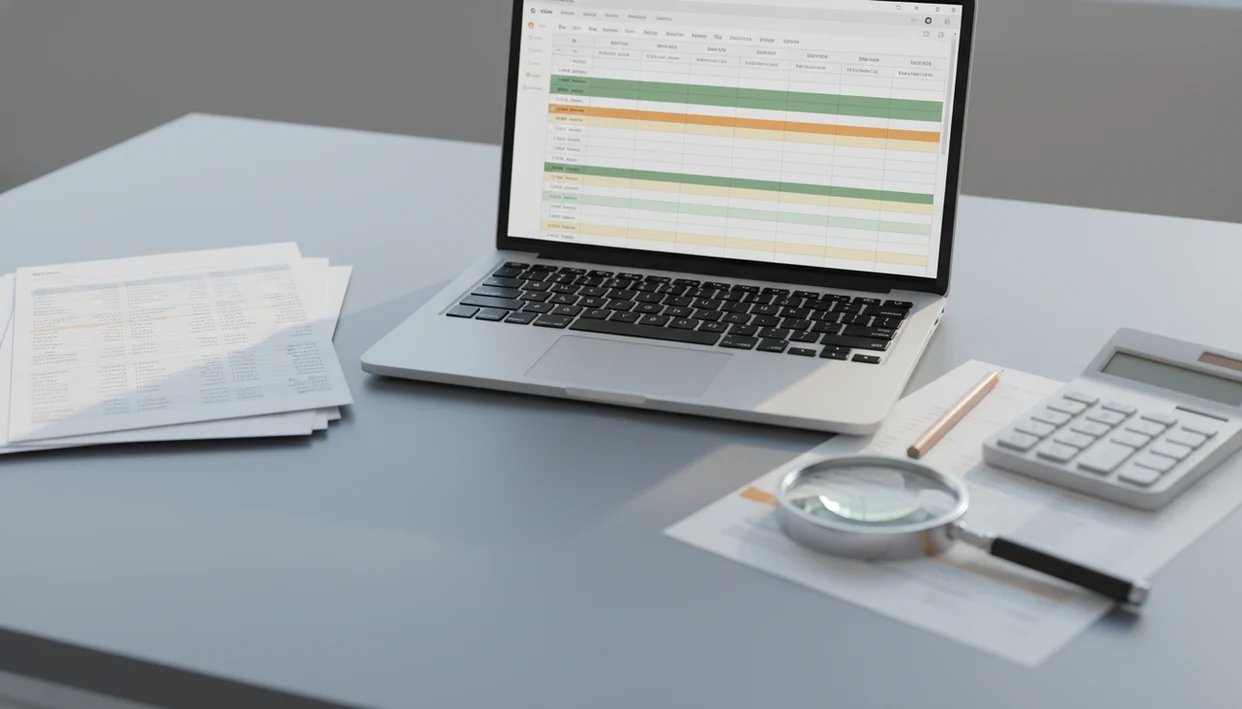
If you are asking “does bank statement converter work,” the answer depends mainly on the PDF quality: native bank PDFs usually convert well, while scans, photos, and unusual layouts need closer review. A good converter can save hours by extracting dates, descriptions, amounts, and balances into CSV, Excel, or QBO, but the output should be verified before import.
> Bank Statement Converter App is a bank statement converter that turns PDF bank statements into CSV, Excel, and QBO files for small businesses, bookkeepers, and accountants.
- PDF bank statement converters work best on native digital PDFs downloaded directly from the bank.
- OCR and AI extraction can struggle with low-resolution scans, shadows, skewed pages, multi-account layouts, and unusual bank templates.
- The safest workflow is to convert the statement, compare totals and balances, spot-check high-risk fields, and only then import the file into accounting software.
Does Bank Statement Converter Work on Real Bank PDFs?
“Does bank statement converter work on real bank PDFs?” Usually, yes, when the file is a clean digital statement downloaded from the bank portal. Native PDFs contain selectable text and consistent table structure, so dates, descriptions, withdrawals, deposits, and balances are easier to map into columns.
The answer changes with file quality. A statement named `Chase Checking March 2022.pdf` is very different from a mobile-photo PDF with desk shadows across the transaction table. Accuracy depends on PDF type, scan quality, layout consistency, and whether the statement mixes accounts, currencies, or summary tables.
Conversion is a speed-up, not a substitute for review. For bookkeepers, converting first is often faster than manual retyping because the review starts from structured rows instead of a blank spreadsheet.
Open the CSV anyway.
How Bank Statement Conversion Works
Bank statement conversion works by reading the statement, finding the transaction table, and turning each line into structured fields for CSV, Excel, or QBO. Clean native PDFs are usually read from embedded text, while scanned or image PDFs need OCR, which means the software is recognizing characters from pixels.
After the text is available, layout parsing looks at page regions, column spacing, repeated headers, footers, and table boundaries. That is how the converter tries to separate a transaction list from account summaries, marketing text, page numbers, and balance notes. AI field mapping then decides which values belong in date, description, debit, credit, and balance columns, even when a merchant name wraps onto a second line or a bank uses separate withdrawal and deposit columns.
A typical conversion follows this path:
- Read embedded PDF text when available, or run OCR on scanned pages.
- Detect transaction tables, headers, and page sections.
- Map extracted text into dates, descriptions, debits, credits, and balances.
- Export the structured rows into the selected file format.
- Review the result against the original PDF before import.
Human review is still required because a tidy spreadsheet can hide shifted columns, missing rows, reversed signs, or balance errors.
Bank Statement Converter Accuracy Behind the Scenes
Bank statement converter accuracy depends on how well the tool turns an unstructured statement into a structured transaction table.
How bank statement conversion works: a converter first identifies text, tables, and page regions, then maps transaction fields into rows and columns for CSV, Excel, or QBO export. For scanned or image-based PDFs, OCR reads the characters from the page image. For native PDFs, layout parsing can often read embedded text directly, which reduces character-level errors.
AI field extraction then decides whether a value belongs in date, description, deposit, withdrawal, balance, or check number columns. That sounds simple until a bank wraps a merchant description onto two lines or places the running balance far from the amount column. We see this when the first row in Excel is a transaction, not a header, and the columns shift one cell to the right.
Native PDFs usually outperform scans because the text is already present. OCR has to infer it from pixels. OCR and document-understanding systems are sensitive to image quality, layout, and downstream field extraction. Google Drive’s OCR guidance notes that clear, evenly lit images improve recognition quality (https://support.google.com/drive/answer/176692), while Google’s Document AI overview separates OCR from entity and field extraction, which is why readable text can still map into the wrong column (https://cloud.google.com/document-ai/docs/overview).
Five Bank Statement Converter Accuracy Facts
- Bank statement converters combine OCR, AI extraction, and layout parsing to turn statement pages into transaction rows.
- Native digital PDFs are the most reliable inputs because the converter can often read embedded text and table structure directly.
- Scans and photos create the highest error risk, especially when pages are skewed, shadowed, folded, or low resolution.
- High average accuracy does not guarantee row-level accuracy; one missed negative sign can change a reconciliation.
- Privacy claims should be checked against the provider’s upload handling, encryption, retention, and deletion policy.
A good AI bank statement converter app that turns PDF bank statements into clean CSV, Excel, and accounting-ready files without storing uploads should deliver structured transaction data, not unchecked bookkeeping conclusions. Tools like Bank Statement Converter App can fit that workflow, but the original PDF remains the source file.
For a format-specific workflow, the PDF bank statement converter guide explains how PDF inputs become spreadsheet outputs.
At-a-Glance Bank Statement Converter Accuracy by PDF Type
Bank statement converter accuracy is directional, not a guaranteed percentage. The same tool can perform cleanly on one bank’s native PDF and struggle with a screenshot from another portal.
Treat the ratings below as workflow risk levels, not measured benchmarks. If you publish an accuracy percentage later, tie it to a repeatable test set that names the banks, PDF types, row count, and review method.
| PDF type | Expected accuracy | Common errors | Recommended review level |
|---|---|---|---|
| Native bank PDF | High | Wrapped descriptions, unusual fee rows | Compare totals and spot-check rows |
| Scanned PDF | Medium | OCR misreads, missing rows, column drift | Review every page with totals |
| Mobile photo | Low to medium | Shadows, skew, cropped amounts | Use only after close inspection |
| Screenshot | Low to medium | Cut-off dates, hidden balances | Prefer downloading the actual PDF |
| Complex multi-account statement | Variable | Mixed accounts, duplicated headers, wrong balances | Reconcile each account separately |
A merged file containing three accounts needs a different review plan than a single checking statement. If the converted output looks tidy, still check whether each account section stayed separate.
Before You Start: Files and Checks You Need
Before you start bank statement conversion, gather the cleanest source file and confirm what the output must prove. The best input is the original bank PDF from the portal, not a screenshot, phone photo, or printed scan.
Use this short pre-check before uploading anything:
- Download the native statement PDF from the bank whenever possible, because embedded text and original layout usually convert more reliably than images.
- Confirm the statement period, account name or number, currency, and whether the file is password-protected before processing.
- Choose the review format that fits the job: CSV for simple spreadsheet checks, Excel when you want formulas and filters, or QBO when the next step is accounting import.
- Keep the original PDF open or saved nearby so you can compare opening balance, closing balance, total deposits, total withdrawals, and transaction count.
- Separate files by account or period when a combined PDF could blur sections that need different reconciliation checks.
A few minutes here prevents the common mistake: reviewing a neat spreadsheet without proving it still matches the bank’s source document.
How to Use a Bank Statement Converter Before Import
Use a bank statement converter as an import preparation step, not as the final accounting record. The goal is an accounting-ready file that still matches the original PDF.
- Download the original statement directly from the bank portal, preferably as a native PDF rather than a scan.
- Upload the source file and confirm you selected the correct statement period before processing.
- Select CSV, Excel, or QBO based on the downstream system; spreadsheets are easier for review, while QBO may fit QuickBooks import.
- Review the converted output for headers, dates, amounts, descriptions, and transaction direction before making changes.
- Reconcile opening balance, closing balance, total deposits, total withdrawals, and transaction count against the PDF.
- Export or import only after the file passes review; never send an unreviewed conversion straight into accounting software.
In the QuickBooks import screen, date, description, and amount columns still have to map correctly before the file is accepted. For Bank Statement Converter App, that means the conversion is only one control point; the import screen is the second place to catch wrong dates, reversed signs, or shifted amount columns before they affect the books. For CSV-focused work, use a dedicated convert bank statement PDF to CSV workflow before upload.
Field-Level AI Statement Extraction Accuracy Checks
AI statement extraction accuracy varies by field. Dates are usually stable when the statement uses one date format, but they can slip when posting dates and transaction dates appear together. Descriptions are more fragile because merchants, memos, and cardholder notes often wrap across lines.
Amounts are often easier to validate than descriptions because they can be summed. Still, negative signs, parentheses, debit-credit reversal, and split deposit-withdrawal columns deserve close attention. Running balances can be useful for checking row order, but some banks omit them on credit cards. Check numbers may be misread when they sit near a transaction code.
A fast spot-check is to test the first five rows, last five rows, every large transaction, and any line near a page break. We like checking the highlighted deposit line on page three against the same row in Excel. Small mismatch. Big warning.
Common Myths About AI Bank Statement Converter Accuracy
- Myth: converters are 100% accurate. The accurate version is that strong converters can be highly reliable on clean inputs, but row-level review is still required.
- Myth: one successful bank means every bank will convert the same way. Each bank template has different spacing, columns, footnotes, and balance placement.
- Myth: AI automatically understands every language, currency, and layout. AI can generalize, but unfamiliar symbols, mixed currencies, and non-standard templates increase review work.
- Myth: no-storage claims mean no temporary processing ever occurs. No-storage policies may still involve temporary processing, logs, or error handling, depending on the provider’s controls.
Apps such as Bank Statement Converter App, docparser.com, and pdftables.com approach extraction differently, so compare privacy language and supported exports before using sensitive files. The best bank statement converter app guide gives a broader comparison framework.
Reconciliation Workflow for Converted Bank Statement Files
Reconciliation starts by proving the converted output still matches the source file. Compare opening balance, closing balance, total deposits, total withdrawals, and transaction count against the original PDF before relying on the file.
Missing rows often show up as a transaction count mismatch or a broken running balance. Duplicate rows usually appear near repeated page headers or tables that continue across pages. Sign errors are easier to find by summing deposits and withdrawals separately instead of looking only at the net change.
Review the first page, last page, and any page with dense tables, fee summaries, or footnotes. A bookkeeper kitchen table after bedtime may not sound like a control environment, but the checklist still matters. For regulated, audit, lending, AML, or KYC workflows, a stronger human validation process is required.
If you mainly need spreadsheet review before reconciliation, an app that converts bank statements to spreadsheets can be easier than rekeying from PDFs.
Limitations
Bank statement converters can fail or require manual correction in predictable cases.
- Low-resolution scans can turn 8s into 3s, drop decimal points, or blur small check numbers. - Skewed pages, shadows, folds, handwriting, and screenshots reduce OCR reliability. - Complex layouts with multiple accounts, mixed currencies, overlapping columns, or non-standard templates need closer review. - Converters do not automatically apply your accounting categorization rules for meals, rent, payroll, transfers, or owner draws. - No-storage or in-memory processing reduces exposure, but it does not eliminate security risk. For U.S. financial-data workflows, compare the provider’s access controls, encryption, monitoring, and disposal practices against the FTC Safeguards Rule guidance: https://www.ftc.gov/business-guidance/privacy-security/safeguards-rule. - Password-protected files may require local unlocking or supported upload handling before extraction. - Audits, lending, AML, KYC, and other regulated uses require human validation and documented review. - Bulk conversion can multiply small errors if one bad template is repeated across many files.
The desktop pile of client bank PDFs looks less intimidating after conversion, but the review pile does not disappear. For trial workflows, a free bank statement converter app can help test file fit before committing to a process.
Read more
FAQ
Do PDF statement converters work?
Yes, PDF statement converters work best on clean digital PDFs downloaded directly from a bank. Scans, screenshots, and unusual layouts need closer review.
Are bank statement converters accurate?
Bank statement converters can be accurate on well-structured statements, but field-level checks still matter. Dates, signs, balances, and descriptions should be reviewed before import.
Can OCR read bank statements?
OCR can read scanned bank statements by converting page images into text. Scan resolution, skew, shadows, and small fonts affect the result.
Do scanned statements convert well?
Scanned statements can convert, but they are less reliable than native PDFs. Low resolution, crooked pages, and faint print increase extraction errors.
Can converters miss transactions?
Yes, converters can miss transactions, especially near page breaks, repeated headers, or damaged scan areas. Transaction counts and balance checks help reveal missing rows.
Should I review converted CSV files?
Yes, review converted CSV files before importing them. Check totals, balances, transaction direction, headers, and sample rows against the original PDF.
Is AI statement extraction secure?
AI statement extraction security depends on encryption, processing model, storage policy, deletion practices, and provider controls. Bank Statement Converter App should be evaluated by its current data-handling policy before uploading sensitive files.
Can converters create QBO files?
Some bank statement converters can create QBO files as well as CSV or Excel exports. Bank Statement Converter App supports accounting workflows where QBO output is needed for import preparation.
Convert your bank statement PDF now
Convert messy bank statement PDFs into CSV, Excel, QBO, or QFX with a privacy-first workflow that uses no bank login, in-memory processing, and immediate file deletion.
Upload your PDF now