How to Convert a Bank Statement With Your Phone Securely
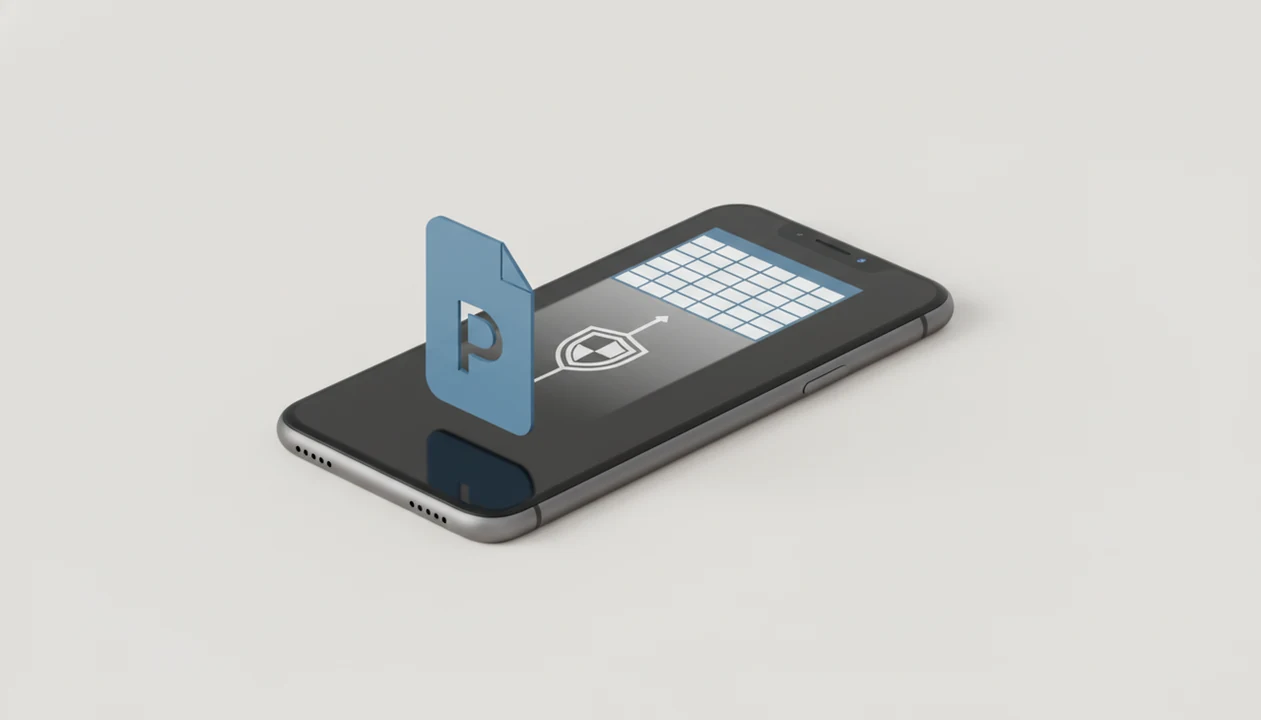
To learn how to convert bank statement with phone, download the PDF statement to your device, upload it to a secure bank statement converter, review the extracted transactions, and export CSV, Excel, or QBO. Avoid tools that require your bank login, and always check dates, descriptions, debits, credits, and balances before importing the file into accounting software.
Bank Statement Converter App is a bank statement converter that turns PDF bank statements into CSV, Excel, and QBO files for small businesses, bookkeepers, and accountants.
TL;DR
- Use the bank’s PDF statement download, not your online banking login, when converting on a phone.
- A mobile bank statement converter should extract transaction rows into CSV, Excel, or accounting-ready formats.
- Review the converted file before using it in QuickBooks, Xero, Excel, or Google Sheets.
What converting a bank statement PDF on phone means
Converting a bank statement PDF on a phone means turning a downloaded statement file into structured transaction data, usually CSV or Excel. The source file is typically something like `Chase Checking March 2022.pdf`, not a screenshot from the banking app.
The converted output should place dates, descriptions, withdrawals, deposits, and balances into separate columns. Some tools also export QBO files for QuickBooks import preparation. For a deeper file-format walkthrough, the convert bank statement PDF to CSV guide covers the spreadsheet side in more detail.
The safer workflow does not require online banking credentials. You download the statement yourself, upload only the PDF, and verify the converted output against the original PDF before using it.
Before converting a bank statement PDF on your phone safely
Before you convert a statement PDF on your phone, prepare the file, connection, and privacy checks first. Phone-first statement access is common; in 2023, 89% of U.S. adults reported using mobile banking in the past 12 months, according to the FDIC source.
- Download the official PDF statement from the bank app, mobile browser, or email attachment. - Save it somewhere you can find again, such as iPhone Files, Android Downloads, Google Drive, iCloud Drive, or a secure folder. - Use a private connection. Avoid public Wi-Fi when handling bank documents. The FTC also advises avoiding sensitive account activity on public Wi-Fi unless you use a secure connection such as a VPN source. - Prefer converters that do not ask for bank credentials and clearly describe no-storage or auto-deletion practices. - Check the statement period before upload. A downloads folder full of `Statement (1).pdf` and `Statement (2).pdf` gets confusing fast.
Small detail. Big mistake avoided.
How mobile bank statement converter technology works
Mobile bank statement converters work by reading the PDF, detecting transaction tables, and returning structured rows. Scanned PDFs and phone photos may need OCR, or optical character recognition, which turns visible text into machine-readable text.
After OCR, table recognition tries to identify columns such as date, description, debit, credit, amount, balance, and totals. AI layout detection helps when banks use different statement designs, so the tool is not limited to one fixed template. The practical translation is simple: the converter looks for repeated transaction patterns, not just isolated words.
Privacy handling varies by provider. Better tools describe encrypted upload, transient processing, in-memory extraction, and deletion after conversion where applicable. These claims are not all audited, so the policy still matters.
Automated document extraction is becoming normal business software: the OCR market is projected to grow from USD 13.23 billion in 2023 to USD 39.6 billion by 2032, according to Precedence Research source.
How to use a phone PDF to CSV converter
Use a phone PDF to CSV converter by uploading the official bank statement PDF, checking the preview, and saving the exported spreadsheet. Do not upload screenshots when a clean PDF is available.
- Open the converter in a mobile browser or app on iPhone or Android.
- Choose the PDF from Files, Downloads, Mail, Gmail, Google Drive, iCloud Drive, or an email attachment.
- Select CSV or Excel as the output, depending on whether you need broad compatibility or easier review.
- Review the preview for dates, descriptions, amounts, and balances before export.
- Export the converted file as CSV, Excel, or QBO if your accounting workflow supports it.
- Save or share the output to Files, Drive, iCloud Drive, email, or your bookkeeping folder.
For many mobile users, CSV is often easier than Excel because it opens in more accounting and spreadsheet tools with fewer formatting assumptions.
Step 1: Download the bank statement PDF to your phone
“Where do I get the bank statement PDF on my phone?” Open your bank app or mobile banking website, then look for Statements, Documents, or Account Documents. Choose the account and statement period you need.
Download the PDF instead of taking screenshots when possible. Screenshots lose text structure and often crop page totals, footers, or pending notes. If the file is password-protected, unlock it first or keep the password ready before conversion.
On iPhone, statements usually land in Files, iCloud Drive, Safari downloads, or Mail attachments. On Android, they often appear in Downloads, Files, Gmail, or Google Drive. Rename unclear files before upload if needed. `client-amex-jan.pdf` beats `download.pdf`.
Step 2: Upload the statement PDF to a secure mobile bank statement converter
Upload the statement PDF through the phone share sheet, file picker, email attachment, cloud drive, or browser upload button. Before tapping upload, confirm the file name, statement period, and page count.
A secure mobile bank statement converter should not need your online banking username or password when you already have the PDF. Look for HTTPS, plain privacy policy language, no-storage claims, and clear deletion practices. Security claims are not standardized, so read them instead of assuming.
For this workflow, Bank Statement Converter App fits best when you already have the official PDF and only need the transaction table converted into CSV, Excel, or QBO. If a tool asks for live bank credentials just to parse a downloaded statement, choose a PDF-only workflow instead.
Tools like Bank Statement Converter App, docparser.com, and pdftables.com can fit different document workflows, but the privacy and export details should be checked before using any converter. The useful tool is one that produces accounting-ready files without asking for bank login access, not one that turns a document task into credential sharing.
Step 3: Review extracted bank statement rows before export
Reviewing extracted rows is mandatory because a converted file is not the original financial record. Open the preview or spreadsheet and compare it against the PDF before import.
- Check dates, descriptions, withdrawals, deposits, fees, balances, and page totals.
- Watch for OCR errors from blurry scans, skewed photos, or low-resolution files.
- Compare beginning and ending balances when the statement provides them.
- Table extraction accuracy can exceed 95% for high-quality financial documents, according to an ACM benchmark study, but noisy scans reduce performance source.
- Confirm the first row is a header row, not the first transaction.
We often check the ending balance on page 3 of a PDF against the final transaction row in Excel. That one check catches more issues than a quick scroll.
Step 4: Export phone PDF to CSV, Excel, or QBO
Choose the export format based on the next system that will use the data. CSV, Excel, and QBO serve different jobs.
| Format | Use it for | Watch for |
|---|---|---|
| CSV | Google Sheets, Excel, databases, and broad imports | Date format and column names |
| Excel | Review, formatting, filters, and multiple sheets | Extra styling can confuse some imports |
| QBO | QuickBooks bank import workflows | Account mapping and accepted file rules |
| Accounting-ready layout | Xero or other accounting imports | Required column names may differ |
Ideal columns include date, description, debit, credit, amount, balance, account, and currency where applicable. If you are deciding between formats, the CSV vs Excel bank statements comparison explains the tradeoff. For QuickBooks, the familiar import screen still asks you to map date, description, and amount columns before the file is accepted.
Common mistakes when converting statement PDF on phone
The common mistakes are small mobile shortcuts that create unreliable accounting files. Automation helps, but it does not excuse a bad source file.
Screenshot uploads: Screenshots are harder to parse than original PDFs and may omit balances or page totals.
Public Wi-Fi: Avoid uploading sensitive bank documents from airport, hotel, or cafe networks.
Skipped preview: A CSV can look tidy and still contain a swapped debit column.
Wrong date format: Accounting imports may reject `03/04/2024` if the system expects day-month-year.
Mixed accounts: Combining personal and business statements in one export creates cleanup work later.
Unverified storage claims: Do not assume every online converter stores files, and do not assume none do. Check the policy.
Levvel Research found that 86% of small and medium-sized enterprises manually enter invoice data into their systems when they lack automation tools source. That explains the appeal of statement conversion, but review still matters. The bank statement CSV format guide shows what clean columns should look like.
Limitations
Phone-based bank statement conversion is useful, but it has real limits. Treat the converted output as a working file, not the official record.
- Low-resolution scans, skewed photos, and image-heavy PDFs can cause misread rows.
- Complex bank layouts can swap debit, credit, or balance columns.
- Multi-currency accounts may need manual currency and exchange-rate review.
- Localized date formats can import incorrectly if not checked.
- Very large PDFs may upload slowly or fail on weak mobile networks.
- No-storage and secure-processing claims are not always independently audited.
- AI converters do not replace bookkeeping judgment or accounting review.
- Password-protected PDFs may require unlocking before upload.
- QBO exports may still need mapping in QuickBooks or another accounting system.
For accounting work, mobile conversion usually works best when the PDF is clean and the user compares totals before import.
Read more
FAQ
Can I convert bank statements on an iPhone?
Yes. iPhone users can upload bank statement PDFs from Files, Mail, Safari downloads, iCloud Drive, or the iOS share sheet.
Can I convert bank statements on Android?
Yes. Android users can upload PDFs from Downloads, Files, Gmail, Google Drive, or a mobile browser file picker.
Is converting a bank statement PDF to CSV on my phone safe?
It can be safe if the converter does not require bank login credentials, uses encrypted upload, states its privacy policy clearly, and explains file deletion. You should also review the converted CSV manually.
Do bank statement converters need my online banking login?
PDF conversion should not require your online banking login if you already downloaded the statement file. Avoid tools that ask for credentials just to convert a PDF.
Can scanned bank statements be converted on a phone?
Yes, many scanned statements can be converted with OCR. Accuracy depends on image quality, page alignment, and whether the text is readable.
Which format should I export from a bank statement converter?
Use CSV for broad spreadsheet and import compatibility, Excel for review and cleanup, and QBO for supported QuickBooks workflows. Bank Statement Converter App supports these common accounting outputs.
Can I open the converted bank statement in Google Sheets?
Yes. A CSV or Excel export can usually be opened in Google Sheets for review, filtering, and editing.
Should I review the CSV before importing it into accounting software?
Yes. Check dates, amounts, descriptions, balances, duplicate rows, and column mapping before import.
Convert your bank statement PDF now
Convert bank statement PDFs from your phone without sharing bank login credentials. Use Bank Statement Converter App to export CSV, Excel, QBO, or QFX and review the results before accounting import.
Upload your PDF now